A B O U T
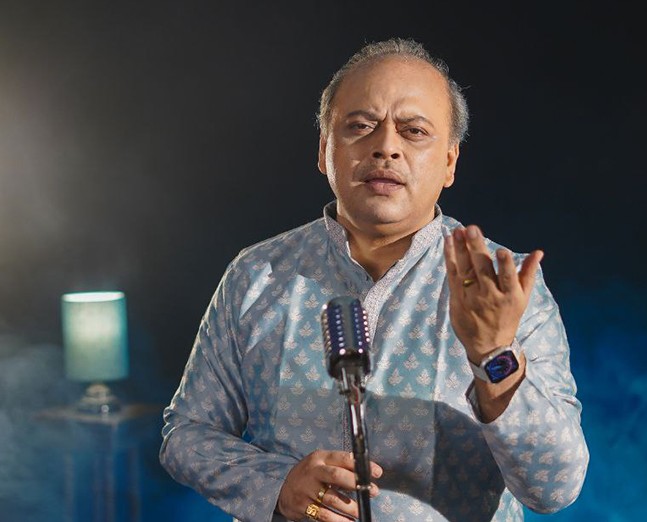
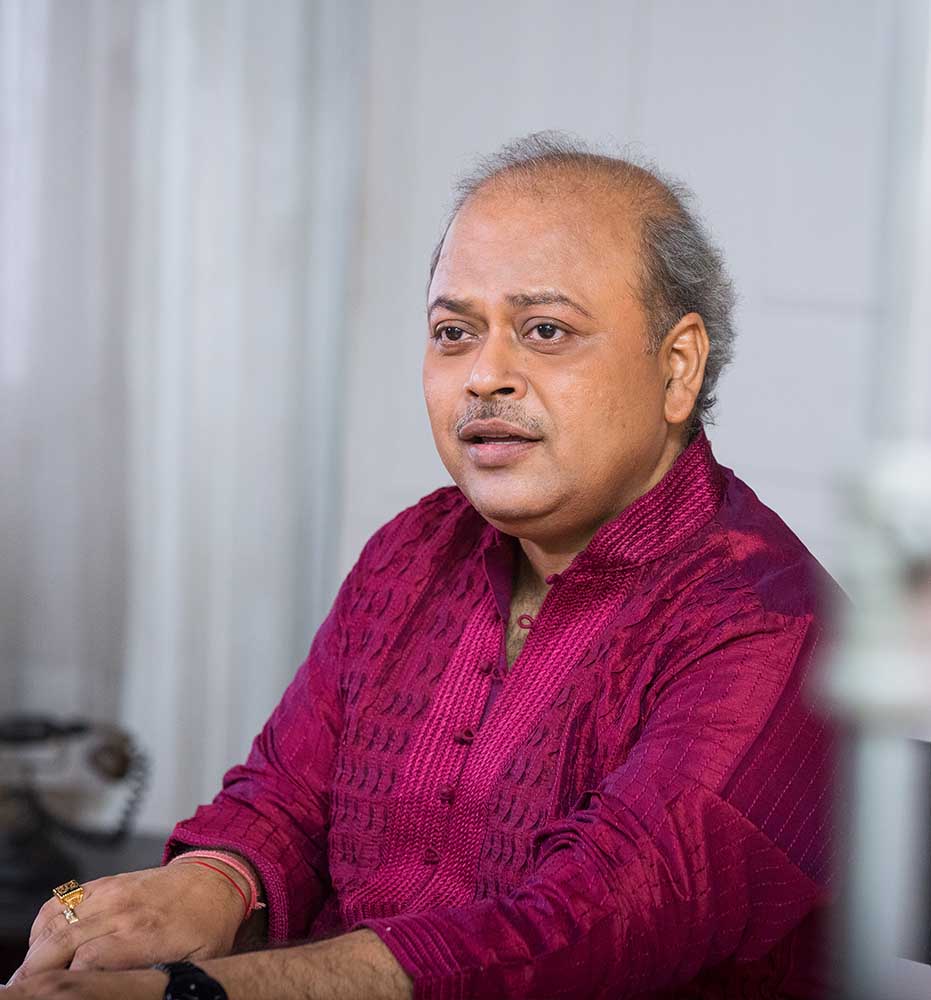
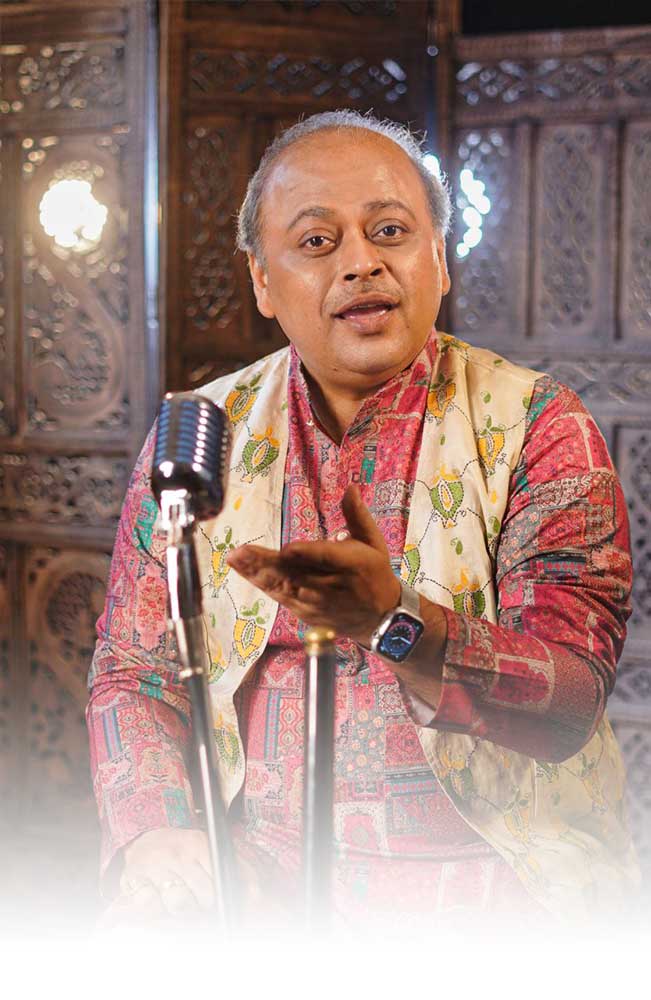
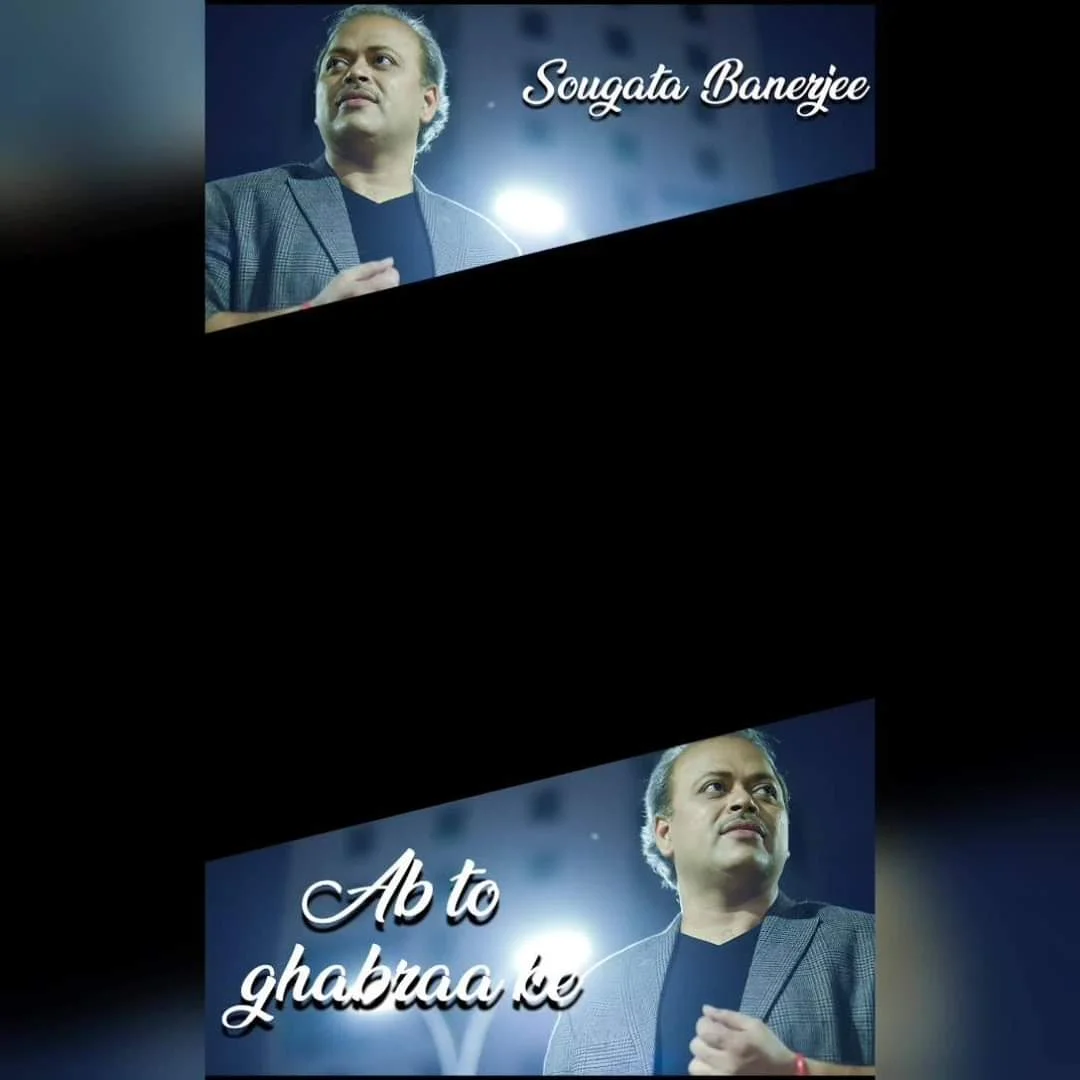
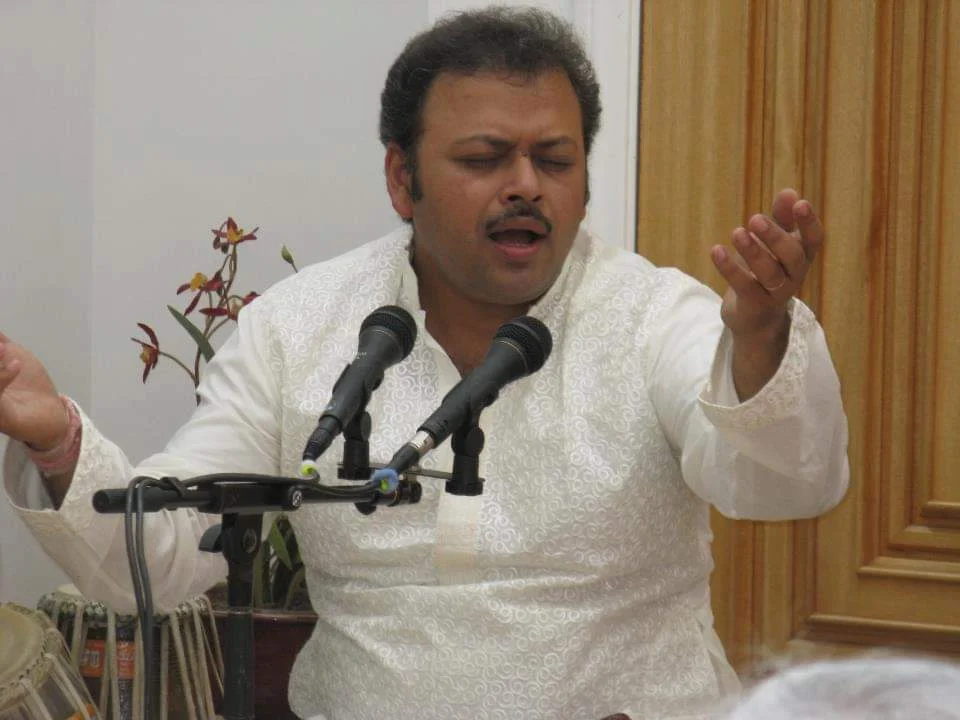
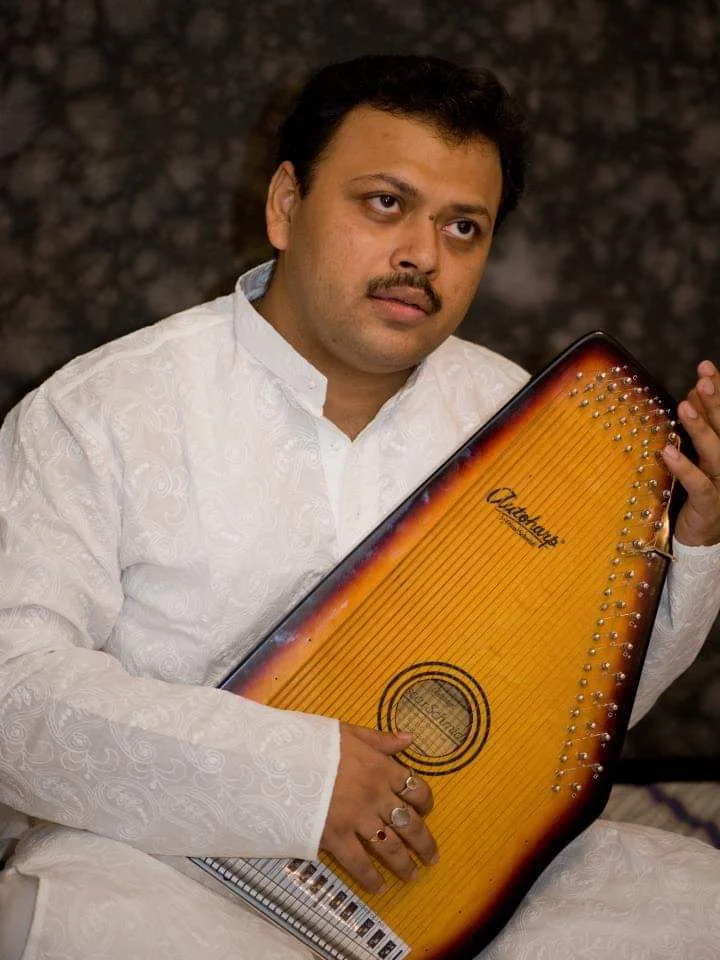
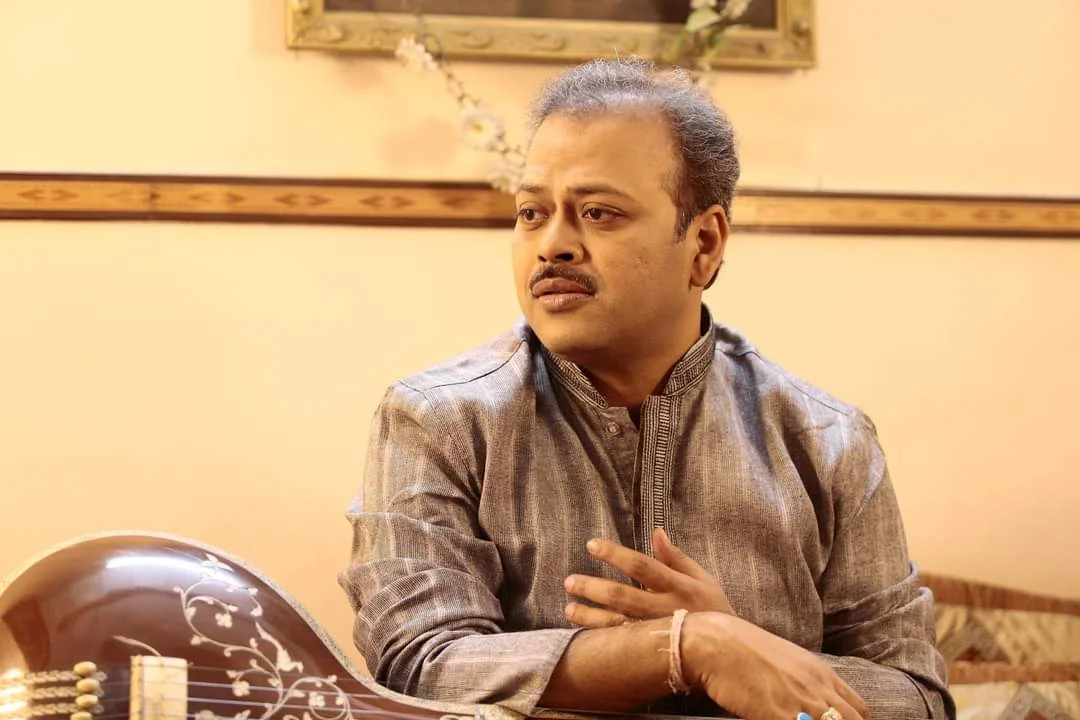
Saugata developed an early connection to the classical soundscape that would define his artistic path. His musical journey began at the age of eight under the guidance of his respected grandfather and doyen of Bishnupur Gharana Sangeetacharya Satykinkar Bandyopadhyay at their home on 25 Balaram Ghosh Street. Growing up surrounded by sitar, Bangla kheyal, bhajans, and ragas such as Ganga Dhar Shankara on raag Multani, and also under the guidence of his father Pandit.Nihar Ranjan Bandyopadhyay.
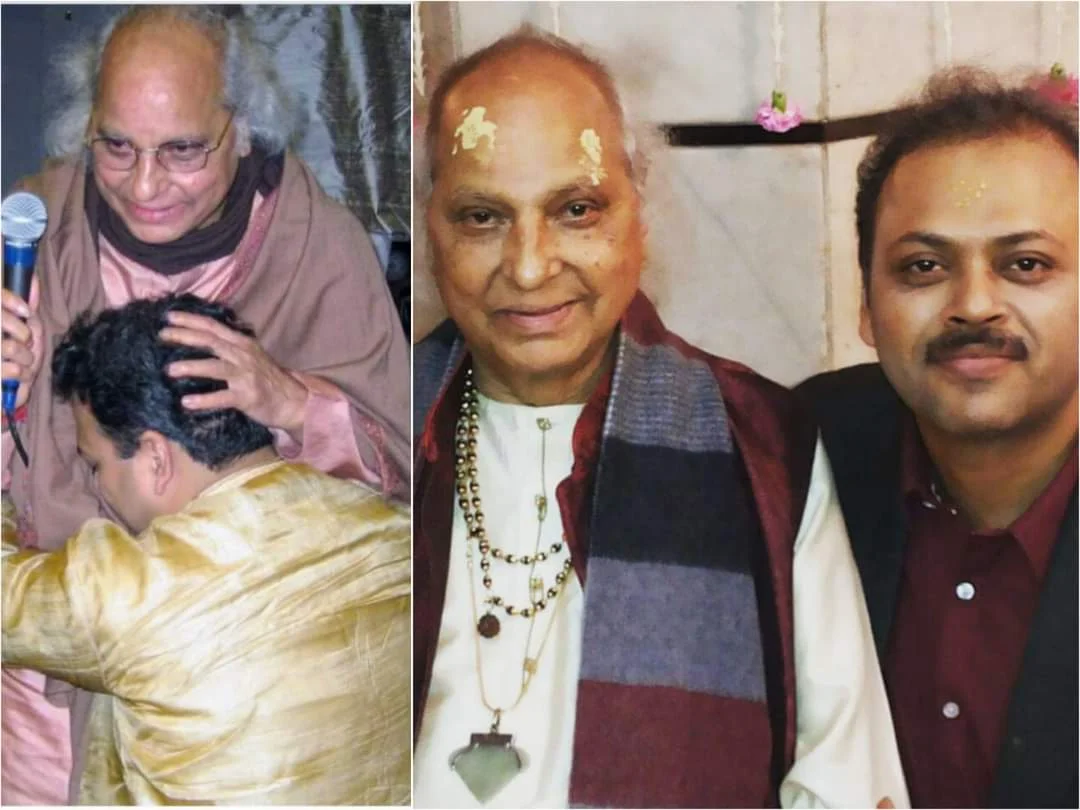
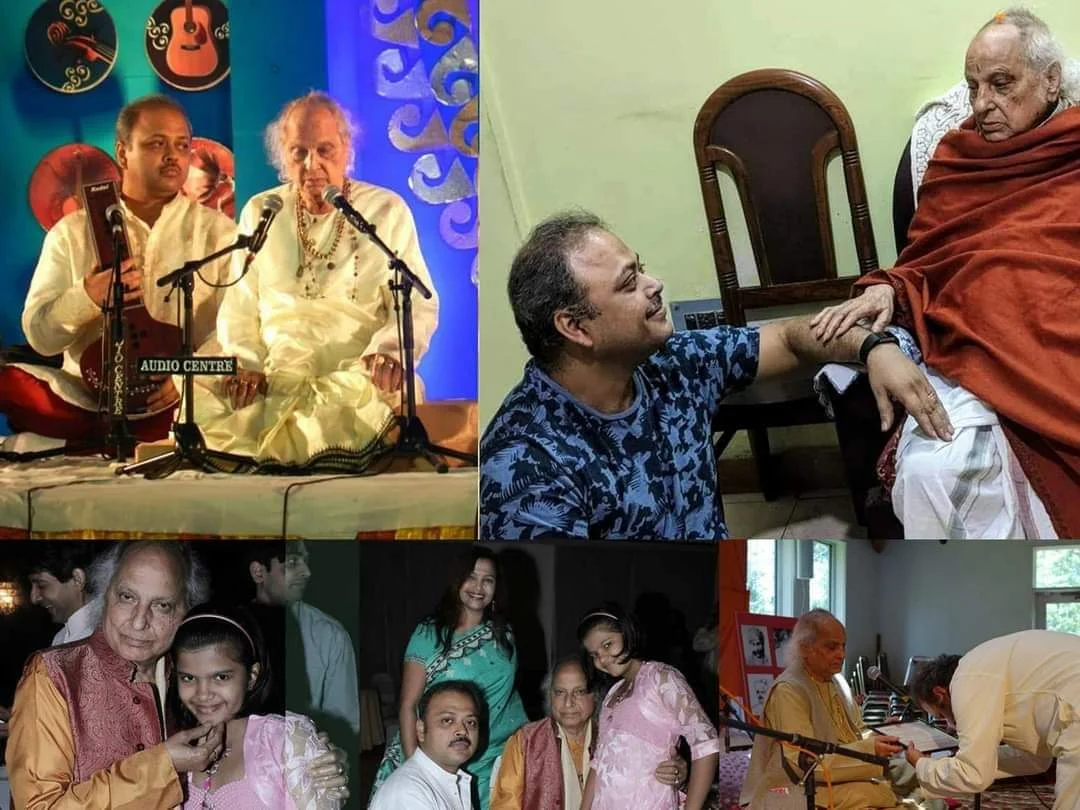
A pivotal moment came when he discovered the music of Guruji Padma Vibhushan Pandit Jasraj ji through the Sadhana musical series and an interview by Anuradha Paudwal ji. Hearing Guruji’s voice on the TV sparked a deep longing to learn from him. Through a senior disciple, that wish became reality, and from 1995 onward, Saugata trained under Guruji’s guidance—an influence he continues to feel profoundly.
His journey was further enriched by an unexpected encounter with Padma Bhushan Jagjit Singh ji. After waiting outside Jagjit ji’s home with quiet hope, Saugata was invited in and asked to sing. What began as a brief exchange stretched into hours, leaving him with an essence of expression that still resonates in his music.
For Saugata, music is more than craft—it is identity, devotion, and surrender. Every note is an offering, a way of connecting with the supreme, and a bridge between the inner self and something far greater.
"About" section authored by Suparna Sen.
A C C O L A D E S & A C H I E V E M E N T S
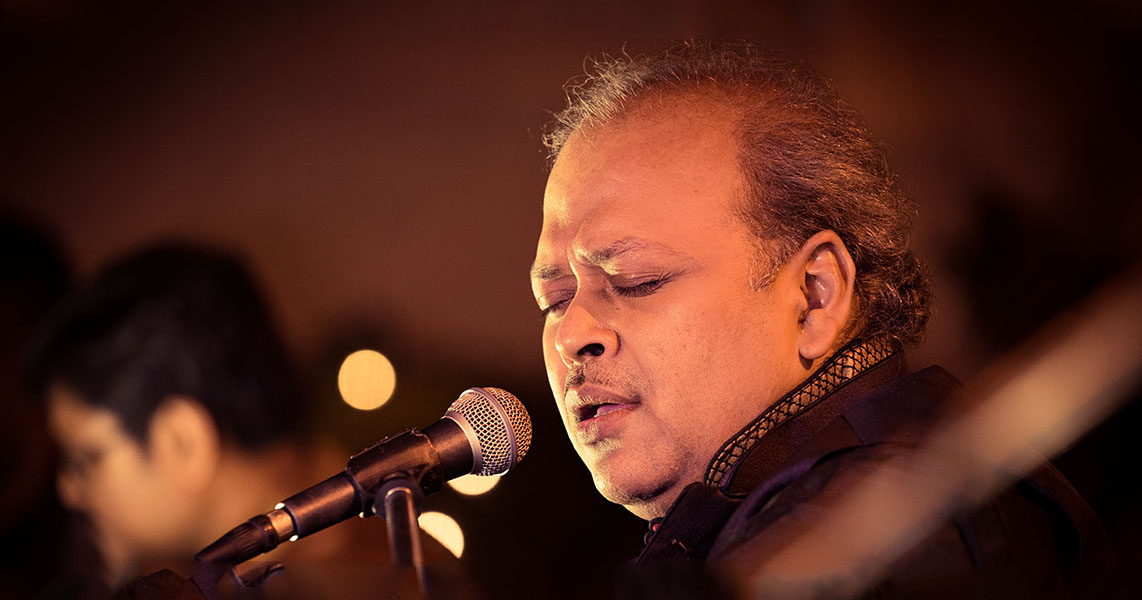
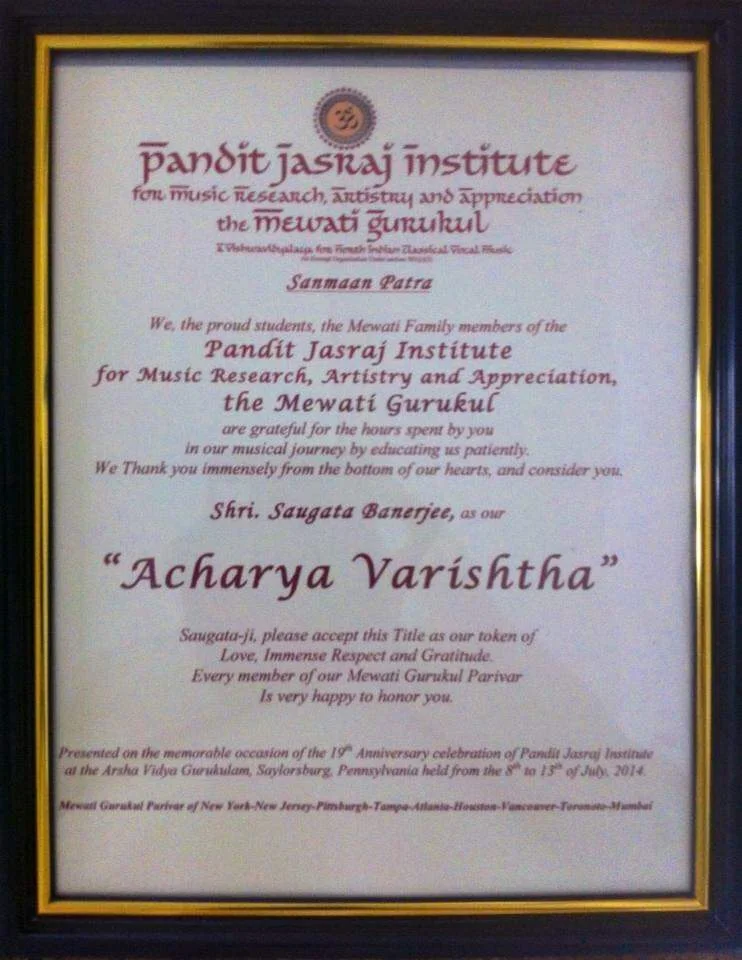
In 1997, he received the "All India National Scholarship". He was also fortunate to receive Sri Jadu Bhatta Award from the Salt lake Music Circle in 2008.
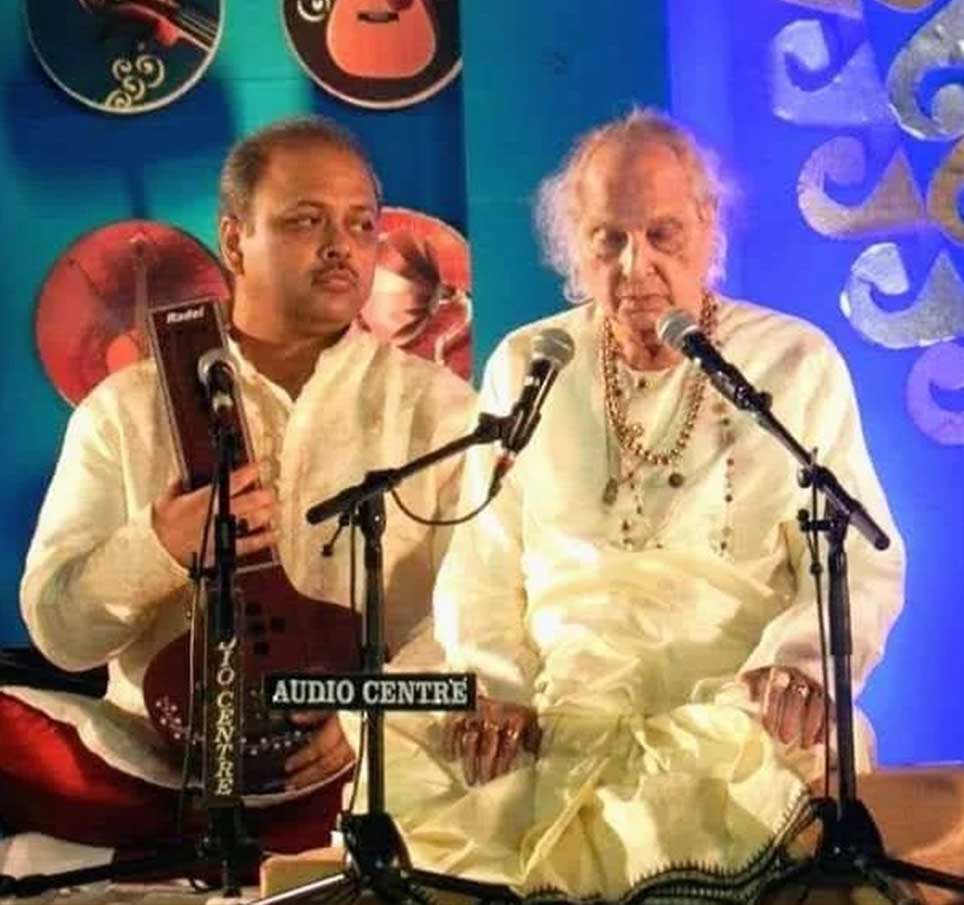
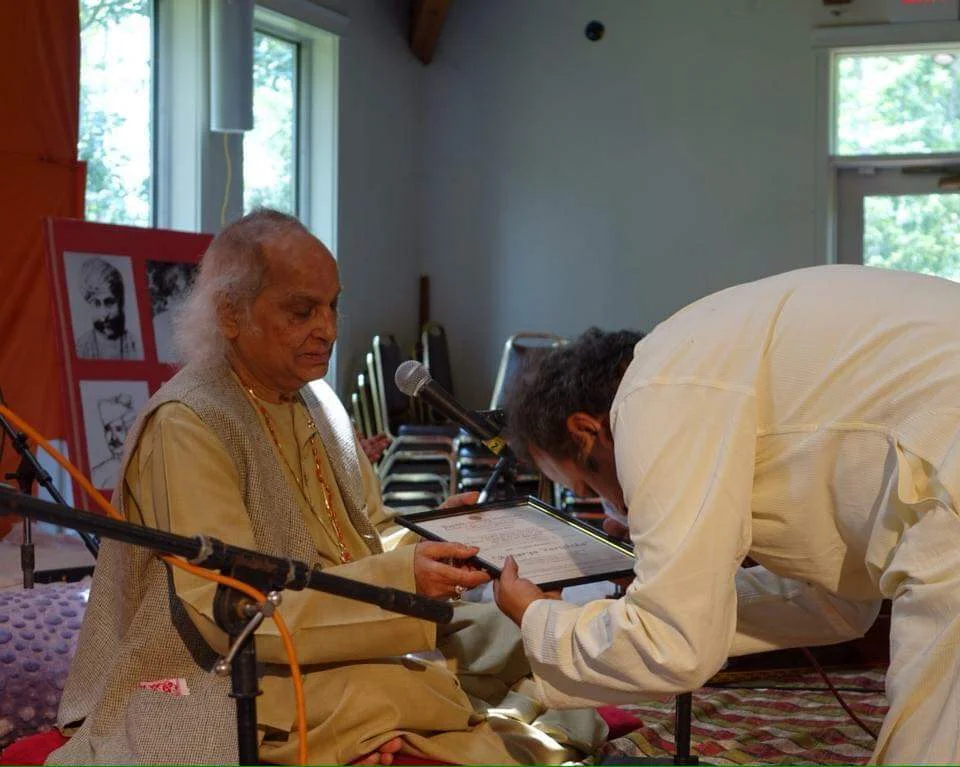
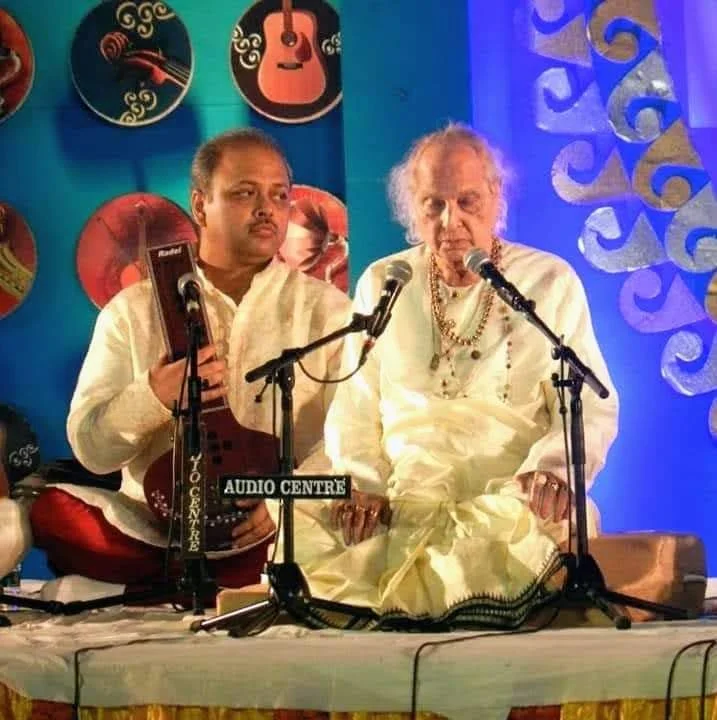
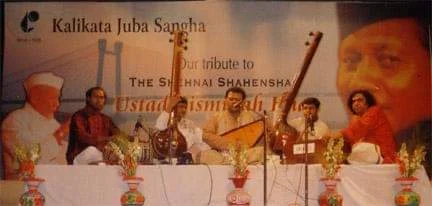
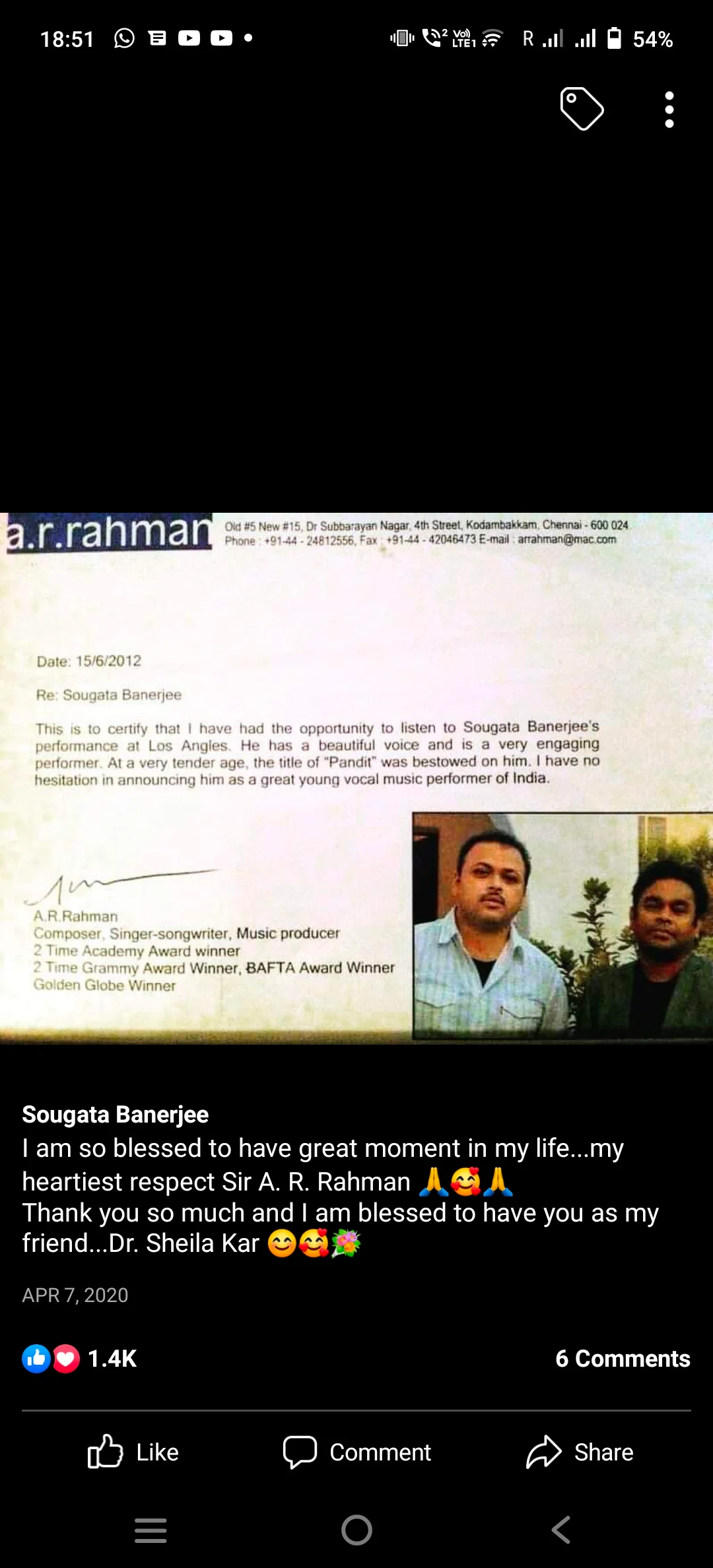
He was lucky to perform in front of many established masters of Hindustani music at different places both in India and abroad. Among them the worth mentioning were his guru Param Pujya Pt Jasraj Ji. At the end in one such occasion while performing with his illustrious Guruji at Tampa, Pandit Jasraj Ji in appreciation of sougata's musical skill proudly and affectionately bestowed him with the title of "Pandit".
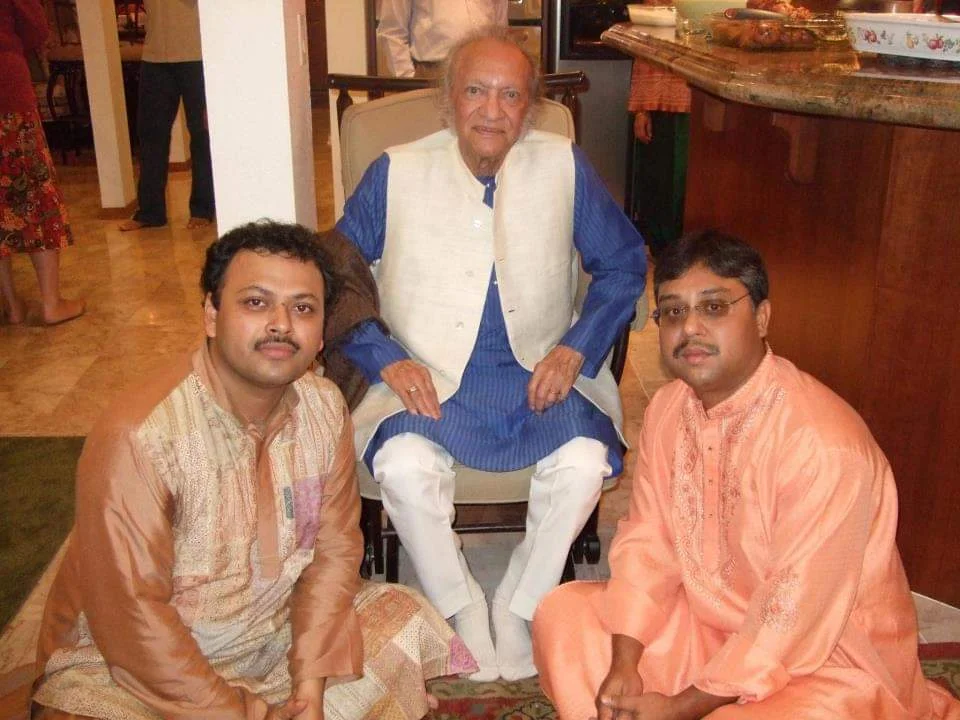
He was fortunate to perform in front of Pt. Ravi Shankar Ji in US, and was delighted to meet him and know about his grandfather who was the doyen of Bishnupur Gharana. And at the end of the concert Pt Ravi Shankarji exclaimed by saying "Aaj Ka Shaam Ban Gaya".
A U D I O V I S U A L S

G A L L E R Y







B L O G
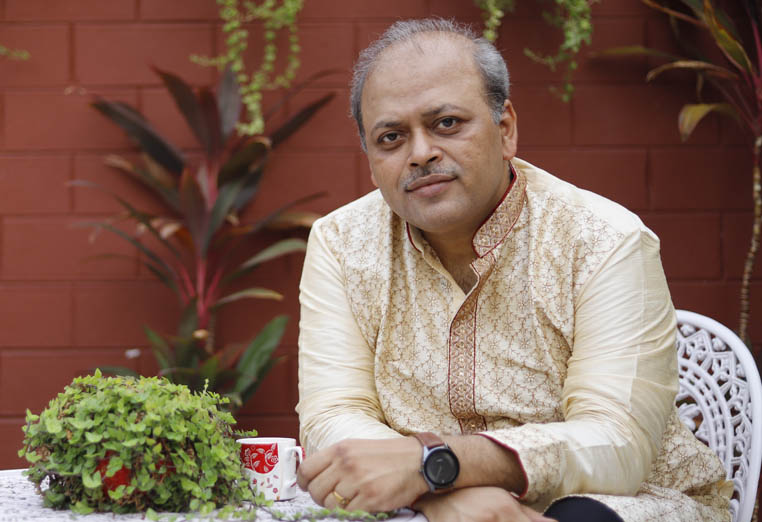


 Sougata
  Jul 23 2022
In the western global the sitar is possibly the maximum widely recognized musical instrument in India. Its sound inspires the mind and...
 Sougata Apr 16 2022
Om is a mantra or vibration and a meditation practice that can calm your anxious mind and tired body. Find out what more it can do....
 Sougata Mar 27 2022
If you are a person who is not fond of reading then you might be missing out, People often don’t understand the Benefits of Reading Books....
 Sougata Feb 11 2022
Nowadays we all are habituated with the word ‘quarantine’, aren’t we? Most of the people weren’t known about this word...
Sougata Jul 23 2022In the western global the sitar is possibly the maximum widely recognized musical instrument in India. Its sound inspires the mind and emotions of the sub-continent. It is thought to have developed into its gift shape withinside the 1700\’s, in the course of the disintegration of the Moghul Empire, as a wedding among the Persian Setar and the South-Indian Vina, whilst the use of the typically resonant bridge of the Tanpura. There is a common story attributing the invention of the sitar to Amir Khusru. Amir Khusru was a great personality and is an icon for the early development of Hindustani Sangeet (North Indian classical music). He lived around 1300 AD. As common as this story is, it has no basis in historical fact. The sitar was clearly nonexistent until the time of the collapse of the Moghul Empire.
Another idea has the sitar evolving from the historical veenas together with the rudra vina. However the rudra vina is a stick zither even as the sitar is a lute, and there are variations in substances used. It isn\'t very probably that the sitar owes its origins to this instrument. Some suggest that the sitar is derived from the Saraswat ior Khachappi vina. This is at least a possibility. Still there are questions raised. There is a possibility that the lute class of chordophones is not indigenous to India but was imported from outside. But the use of Gourd for sound box the metal oval frets and also the temple carvings strongly suggests that it is an adaptation of some kind of veena with some present day modification.
It is clear that the sitar as we see it today developed in at the end of the Moghul era.. The “Sangeet Sudarshana” states that the sitar was invented in the 18th century by a fakir named Amir Khusru. This of course was a different Amir Khusru from the one who lived in 1300. This latter Amir Khusru was the 15th descendent of Naubat Khan, the son-in-law of Tansen. It is said that he developed this instrument from the Persian Sehtar.
Amir Khusru\’s grandson Masit Khan was one of the most influential musicians in the development of the Sitar. He composed numerous slow gats in the dhrupad style of the day. This style is referred to as Masitkhani Gat. The Masitkhani gats were further popularized by his son, Bahadur Khan. Masit Khan was a resident of Delhi; therefore Masitkhani Gats are sometimes referred to as Dilli Ka Baaj.
Raza Khan was also an important person in the development of sitar music. Raza Khan was also a descendent of Tansen and lived in Lucknow around 1800-1850. Raza Khan was also known as Ghulam Raza. He developed the fast gat known as Razakani gat.
Amrit Sen and Rahim Sen are credited with modifying the tuning and stringing of the Sitar and introducing numerous new techniques to the instrument.
Whatever its true history, the sitar has continued to evolve over the centuries and is still evolving.. Presently, there is 3 forms of sitar The the Kharaj pancham ( sitar in General with,7 stringes with 2 bass strings) the Ghandhar pancham( 6 stringed no bass strings.).and the Ravi Shankar style(Kharaj pancham with, with 6 strings)The Kharaj Pancham sitar Played and popularized by Ravi Shankar, has 4 octaves and 6 primary playing strings and 2 bass strings. The Gandhar pancham sitar modified and popularised by Vilayat Khan has 3 octaves and no bass strings In addition to the top playing strings threr are 12 to 13 Tarafs (resonating strings ) underneath the top 7main strings. When a note is struck on the fret these Tarafs ring with the same frequency to create a natural reverb inbuilt in the instrument.
The Sitar\’s neck and face are made of Indian mahogany and its round back/base is of a dried pumpkin. Although the Sitar has a minimum of eighteen strings, it generally has just one main playing string. The remaining strings provide it\’s ethereal resonance and/or resonance plus rhythmic accompaniment. The Sitar has two separate bridges, one upper, and one lower. The upper contains the playing string(s) and the chickary strings (used for rhythmic and drone accompaniment). The lower bridge usually has about twelve tarif (sympathetic) strings, which are very fine and are tuned to the notes of the Raga (scale) being played. These strings, when tuned accurately, will resonate without being touched when a corresponding note is played on the upper main string, thus giving the sitar a natural reverb effect. This effect is enhanced by the structure of the bridge. Copied from the ancient tampura (a background drone instrument used primarily to accompany vocal music) the Sitar\’s bridge is made of soft deer-horn and is flat on top and is shaped in such a way as to allow the strings to gently buzz against the flat bridge surface. This effect is called jawari.
The Sitar is a fretted instrument but the frets (metal bars) are tied on loosely enough to be slightly moved or tuned. The tuning of the frets is another feature that sets the sitar apart from western instruments. The Sitar is played in the natural or untampered tuning system. Many western instruments such as the guitar and the piano are designed to be played in the equal-tempered tuning system that is a modern invention without which the chordal harmony and 12 keys of western music would be impossible to achieve from a single instrument. The disadvantage of the tempered system is that it is microscopically out of tune. The Ancient, Natural, or untampered tuning system retains the perfect or natural tuning of each interval. It is believed that music played in the Natural tuning system has a profoundly harmonizing effect on listeners.
The most striking feature of the Sitar\’s playing technique is it\’s main strings capacity for being pulled or bent. On one fret the main string can be pulled downward at least a fourth; for example from C to G. This particular feature has only been available during the last fifty years – since steel strings have been made with enough strength to withstand such tension. This pulling capacity allows the instrument to accurately emulate the gliding effect of vocal music.
The eminent sitar players who contributed in the last 80 years are Mustaque Ali Khan, Lakhan Bhattacharya,Inayat Khan,Bhagwan Das, Gokul Nag, Ravi shankar , Vilayat khan , Halim Jaffar Khan ,Imrat khan Balaram pathak., Nikhil Banerjee, Rais Khan , Manilal nag , Kartick Kumar.
Sougata Apr 16 2022Om is a mantra or vibration and a meditation practice that can calm your anxious mind and tired body. Find out what more it can do. Chanting Om creates vibrations throughout your body, which creates an energy that makes you calmer and happier. The more frequently you chant Om, the stronger your connection to the source becomes. When said aloud, Om (or Aum) sounds like a three-part word. "The A represents creation, U is a manifestation, and M is destruction," explains Kumar. "It\'s all-encompassing—the whole universe joined into a single sound. This is a great practice that energizes the body and mind at the same time. When chanted correctly, it fills the body with a lot of positivity, calmness, and energy. Chanting Om daily can raise your vibration and increase your frequency and energies.
Yoga expert Grand Master Akshar says, “Chanting of Om can be considered as a practice of the collective consciousness. He adds, “Chanting of Om brings you closer to the source (or God). This connection between you and the source stimulates a chemical within you that causes bliss and happiness.”
This powerful mantra has some amazing benefits and protects us from all negative energies and thoughts. A recent study proves that listening to the chants of Om at 432 Hz frequency can prove to be extremely beneficial for your mental and physical well-being. It improves your sleep quality removes any stress and makes you free from anxiety Helps you to balance your emotions and to remain calm even during stressful situations Chanting Om brings better focus It improves your memory and concentration power Builds positive energy and makes you more optimistic Helps you to stay away from negative emotions like anger If you have a stomach ache, then chanting Om will be a remedy for you chanting Om brings peace to the mind and wellness to your whole being Plus, it also relaxes your body and brings down the blood pressure to the normal level and the heart beats with our regular rhythm.
So how long should you chant Om to reap all the benefits of this practice\?
Chanting Om creates vibrations throughout your body, which creates an energy that makes you calmer and happier. The more frequently you chant Om, the stronger your connection to the source becomes.
Grand Master Akshar suggests, “Initially you can start with 108 times and slowly increase this to 200-300 and even chant up 1008 times once a month. The ideal time to chant Om is morning 6, noon, and evening 6, this is known as Sandhya kal or a time of auspiciousness.
But it is also important to understand that the chanting of Om transcends time or any specific auspicious occasion. You can chant Om as many times as you would like and at any time of your convenience that you wish to. You can chant Om at any time of the day whenever you want to and this can be done by anybody.
Sougata Mar 27 2022If you are a person who is not fond of reading then you might be missing out, People often don\’t understand the Benefits of Reading Books, Some says it\’s a waste of time, Some Find it boring. But what exactly do human beings get from reading books\? Is it just a matter of pleasure, or are there benefits beyond enjoyment\? The scientific answer is a resounding “yes.”
Reading books benefits both your physical and mental health, and those benefits can last a lifetime. They begin in early childhood and continue through the senior years. Here\’s a brief explanation of how reading books can change your brain — and your body — for the better.
What should you be reading\? There was a time when remote regions had to rely on librarians traversing the mountains with books stuffed in saddlebags. But that\'s hardly the case today. Just about everyone can access vast libraries contained in cell phones and tablets. If you\’re pressed for time, devote a few minutes daily to a blog on a niche topic. If you\’re looking for an escape, fantasy or historical fiction can transport you out of your own surroundings and into another world altogether. If you\’re on a career fast-track, read nonfiction advice offered by someone who\’s already arrived. Consider it a mentorship you can pick up and put down when it suits your schedule. One thing to note: Don\’t read solely on a device. Flip through print books, too. Studies have shown repeatedly that people who read print books score higher on comprehension tests and remember more of what they read than people who read the same material in a digital form. That may be, in part, because people tend to read print more slowly than they read digital content.
Sougata Feb 11 2022Nowadays we all are habituated with the word ‘quarantine’, aren’t we? Most of the people weren’t known about this word. The devil COVID-19 helps us to know such a kind of word.
First Known: 14th century in the situation where you are. Origin: Comes from the word ‘quaranta giorni’ Original meaning: 40 days in ItalianThe history behind the word During the bubonic plague or Black Death in the 14th century, ships arriving in Venice from infected ports were required to sit at anchor for 40 days before landing to prevent the spread of the disease. Quarantine is distinct from medical isolation, in which those confirmed to be infected with a communicable disease are isolated from the healthy population.
The psychological impact of quarantine In this nationwide survey study, 34.1% of participants with an experience of quarantine during the COVID-19 outbreak reported having at least one of the psychological symptoms including anxiety, depression, insomnia, and acute stress, which is higher than those who were not quarantined (27.3%).
These results suggest that quarantine measures during the COVID-19 pandemic are associated with an increased risk of experiencing mental health burden, especially for vulnerable groups. Longer durations of lockdown are associated with poorer mental health outcomes. The fear of disease and the fear of infecting others have previously been reported especially in pregnant women and those with young children. The absence of routine and the loss of social contact are also having an impact on mental health. Although “quarantine” is often a necessity for the greater good, the length of time in quarantine is a strong predictor of adverse mental health outcomes both in short term and long term.
So, want to be free? Then please maintain all the safety precautions and get vaccinated.
M U S I C & E V E N T S
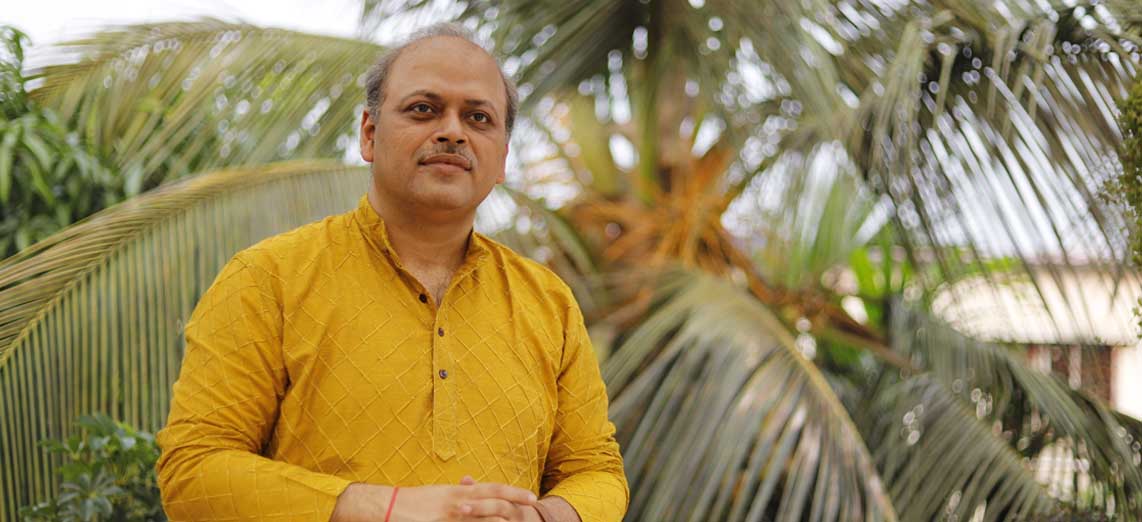

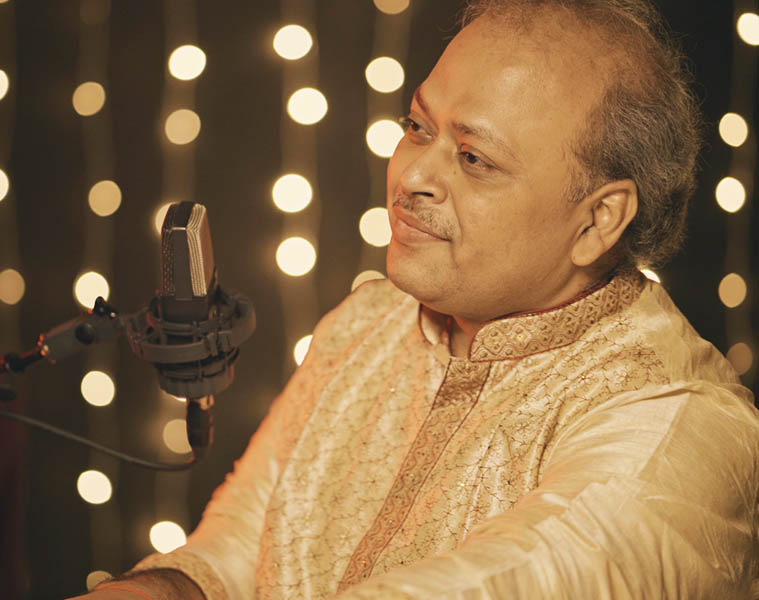
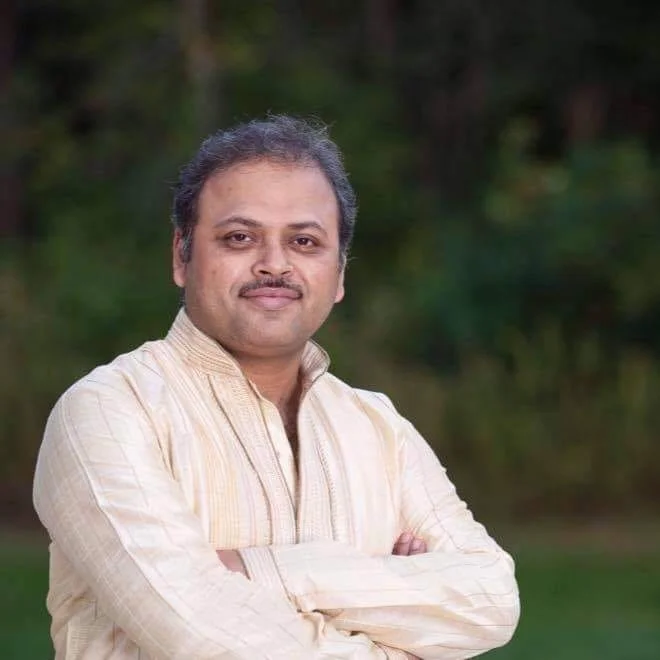
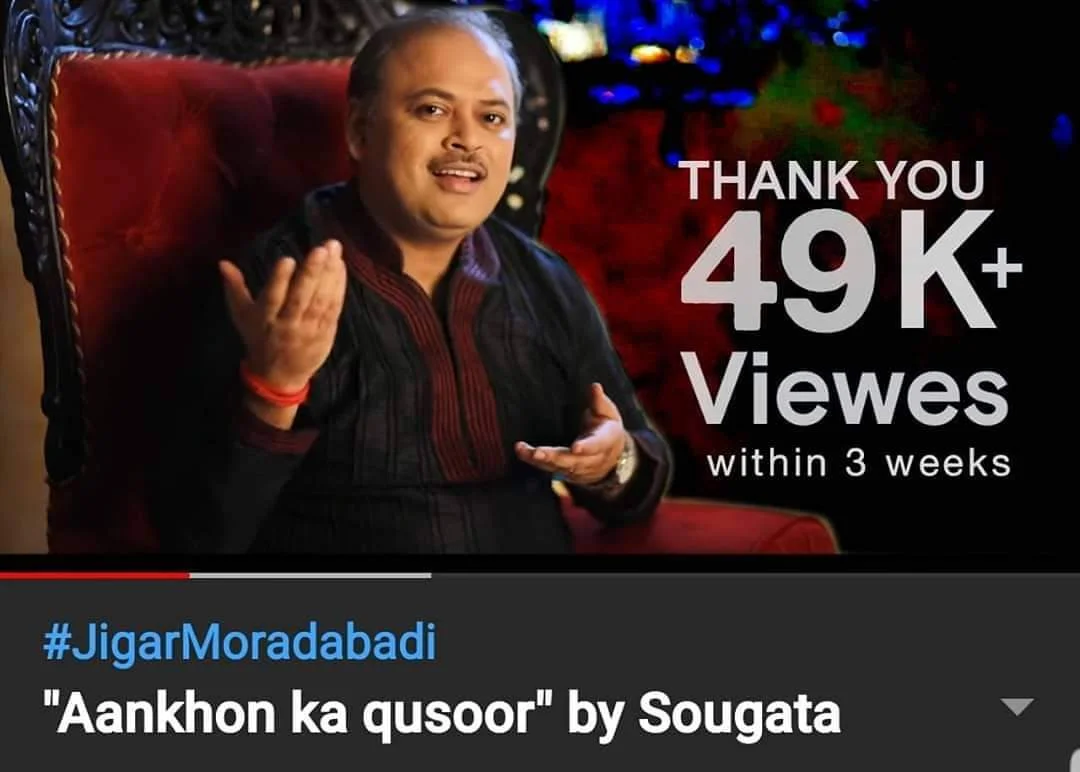
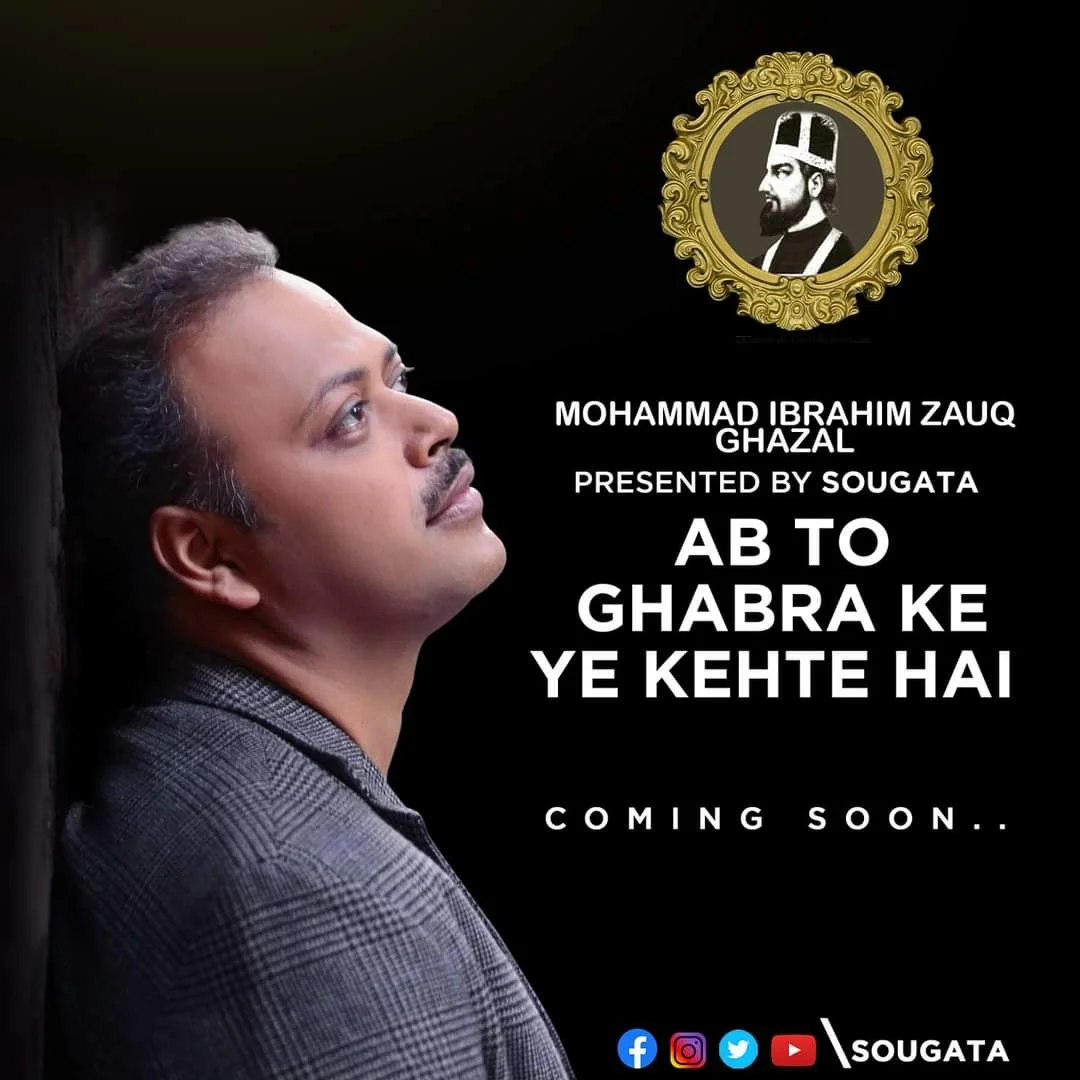
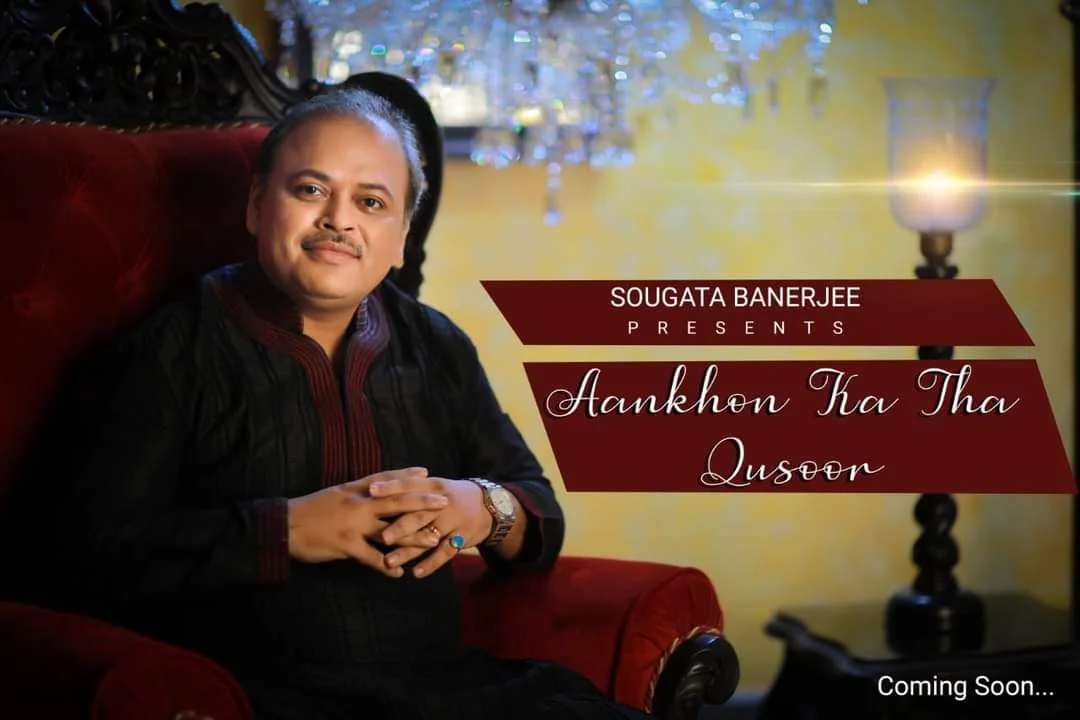
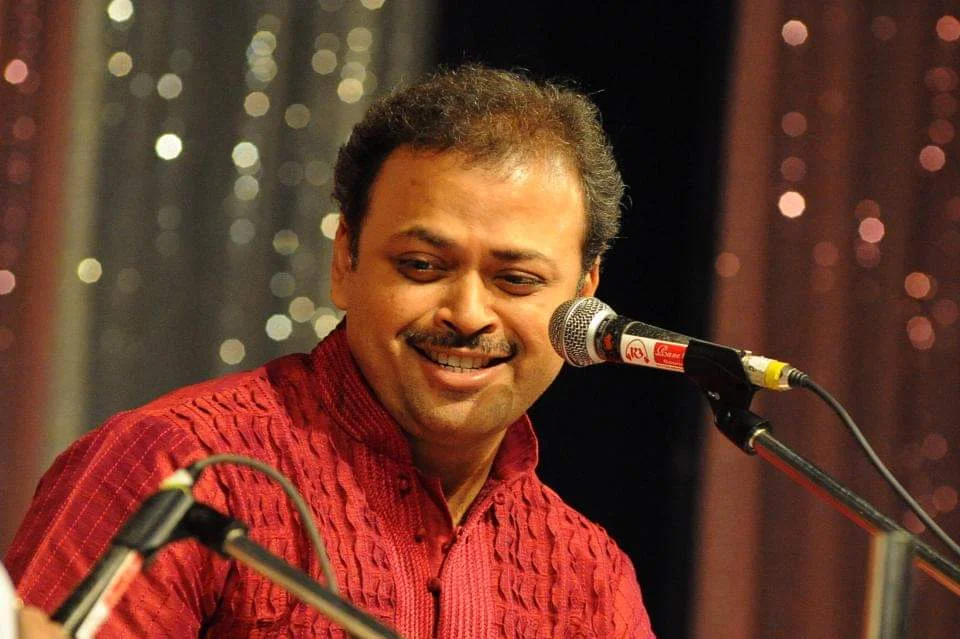
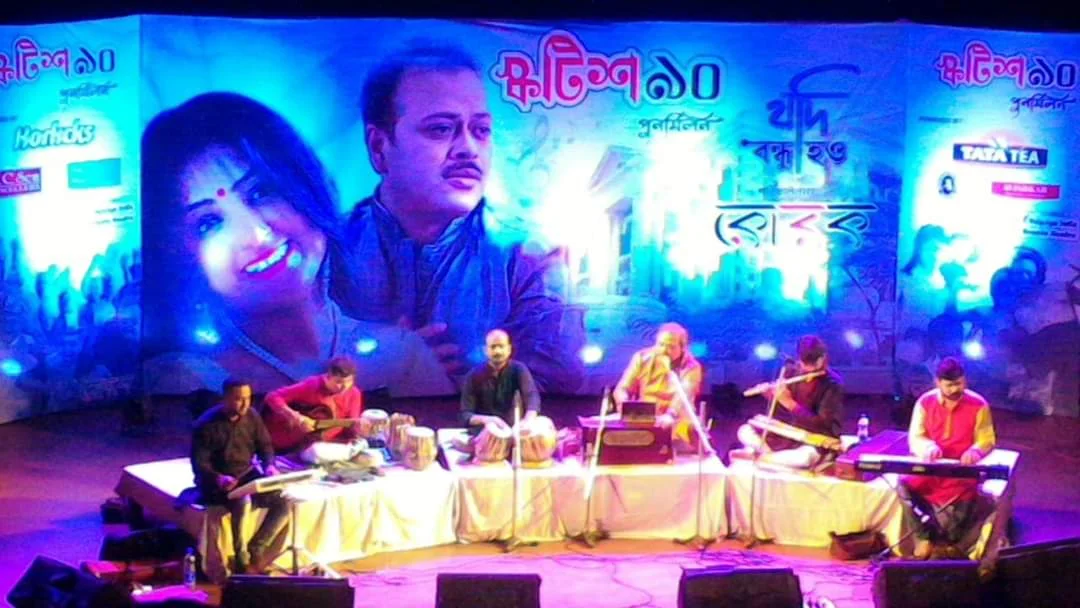
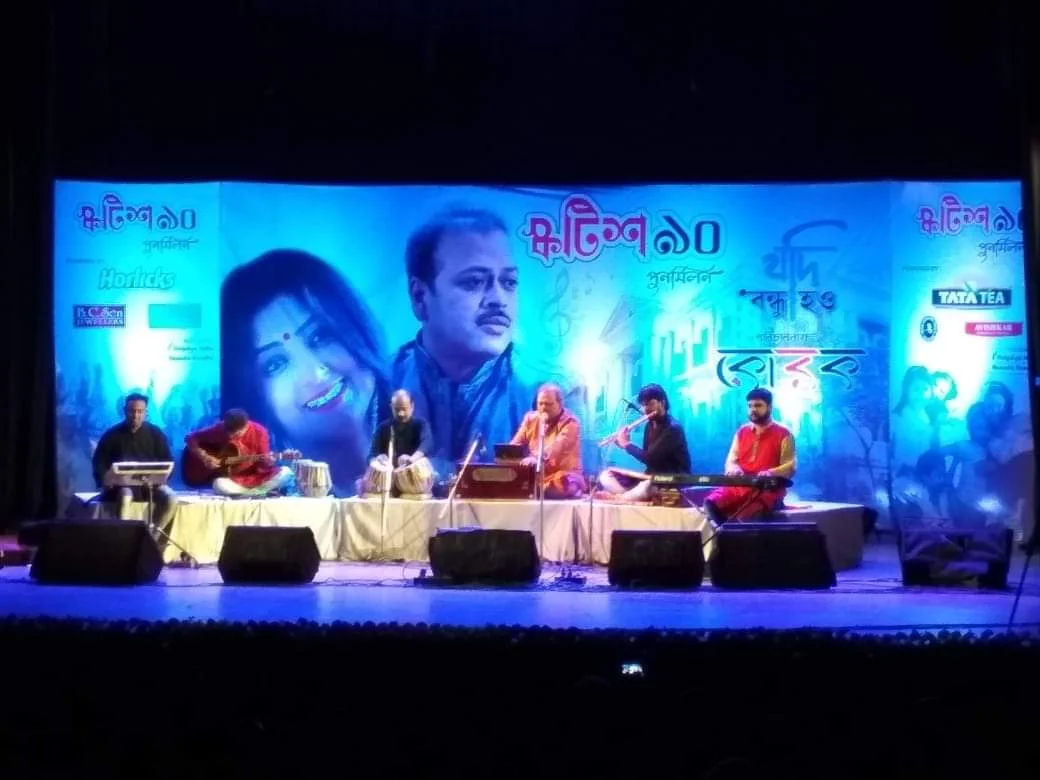
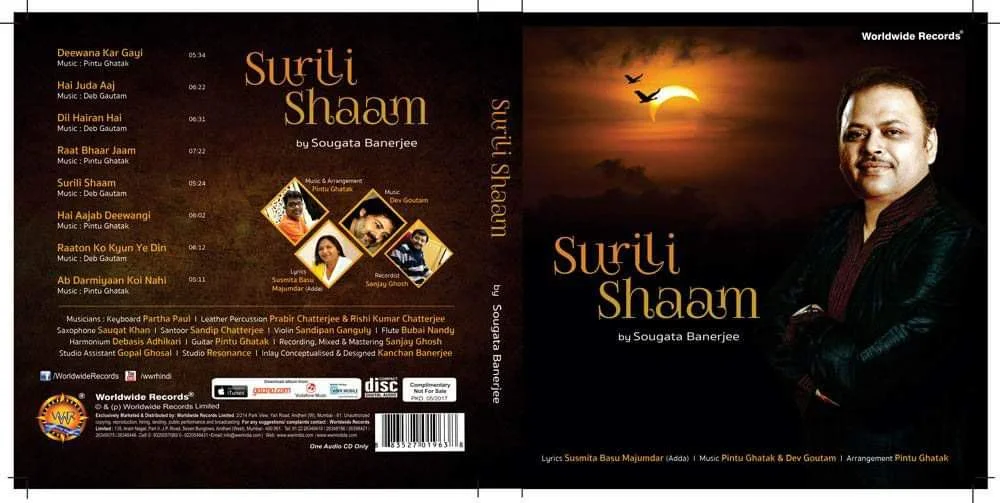
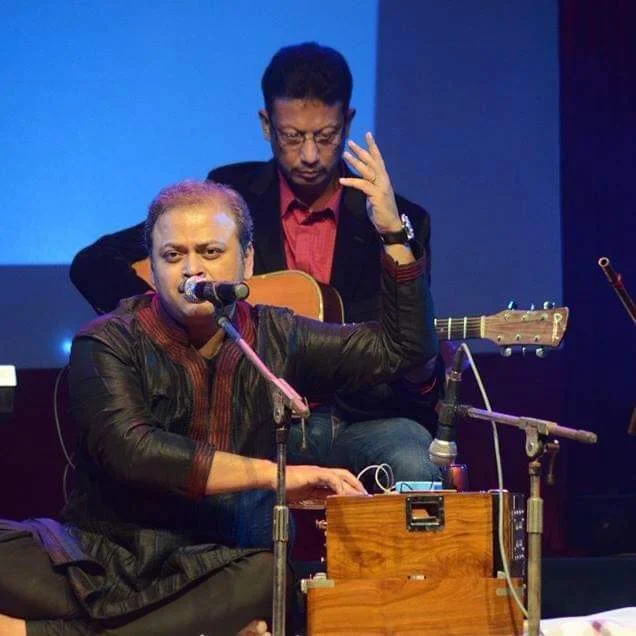
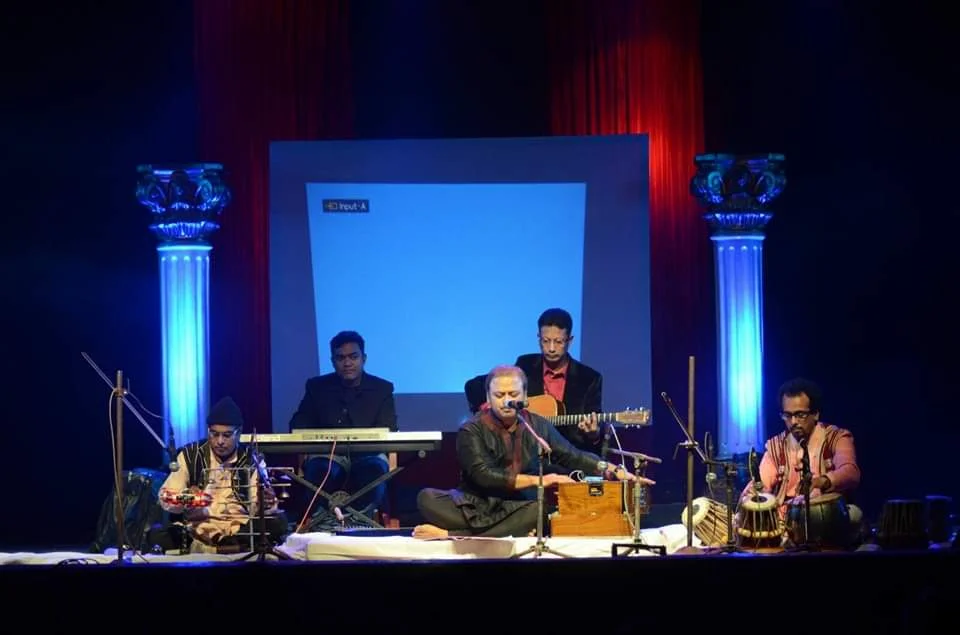
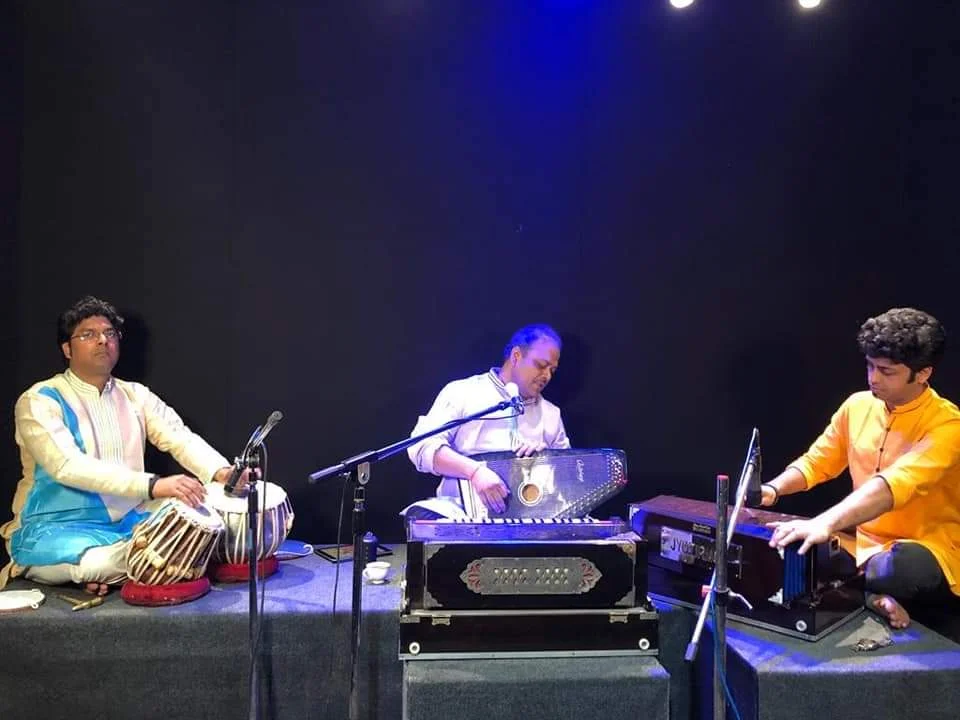
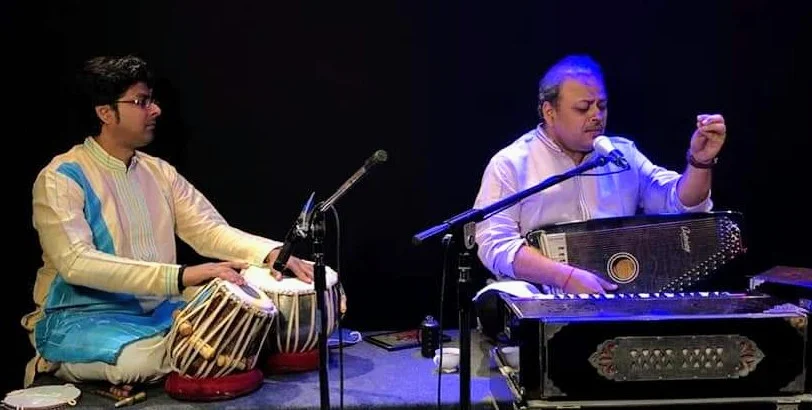
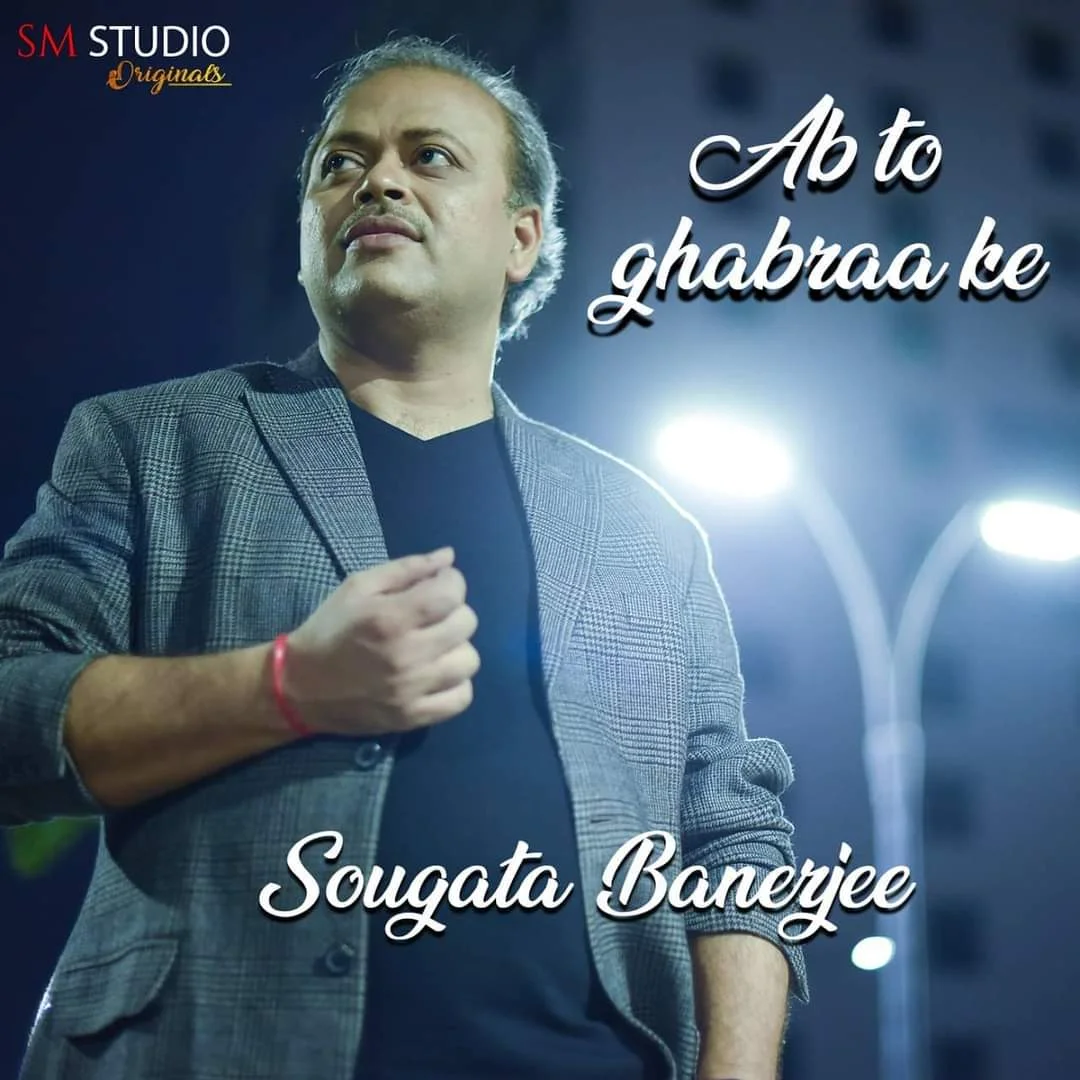
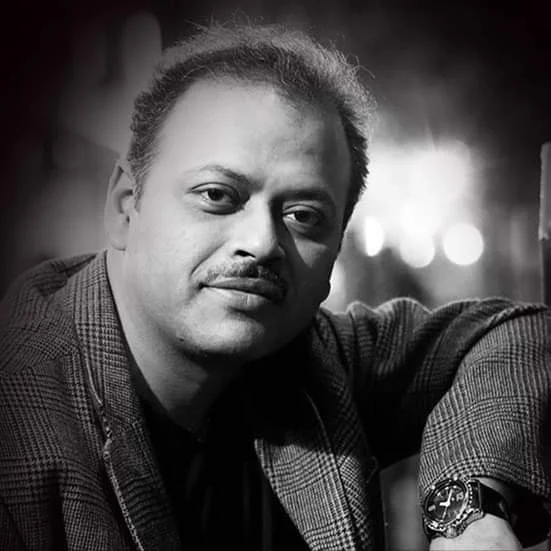
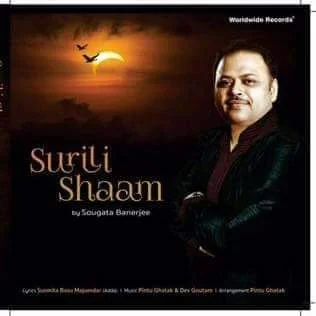
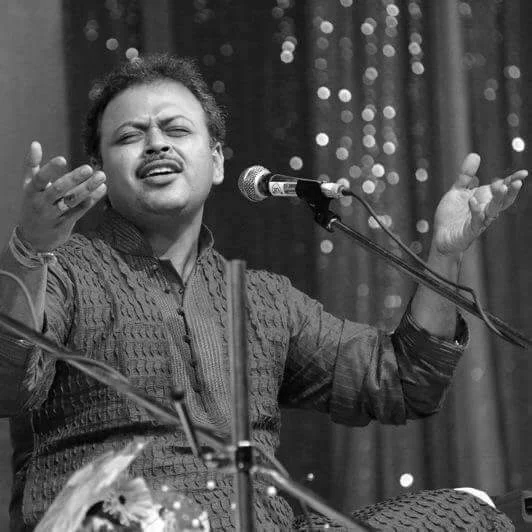
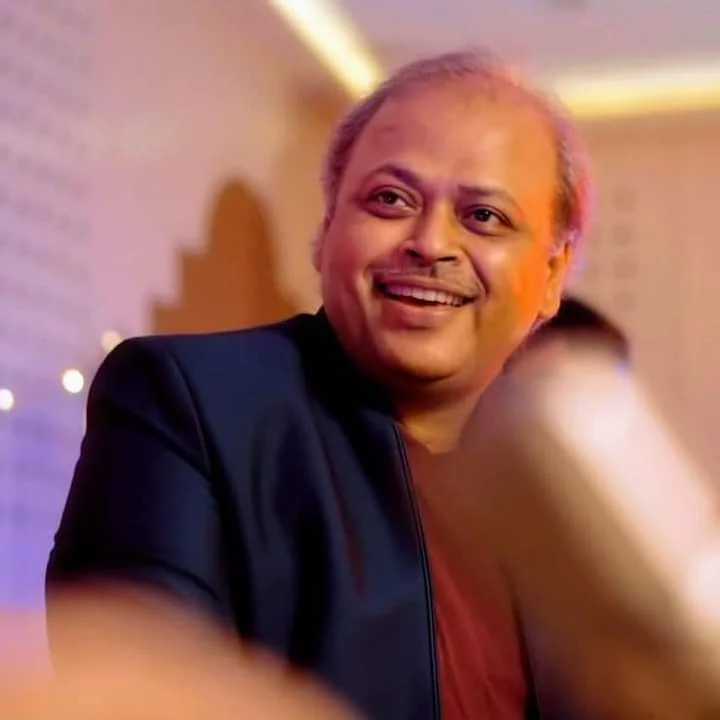
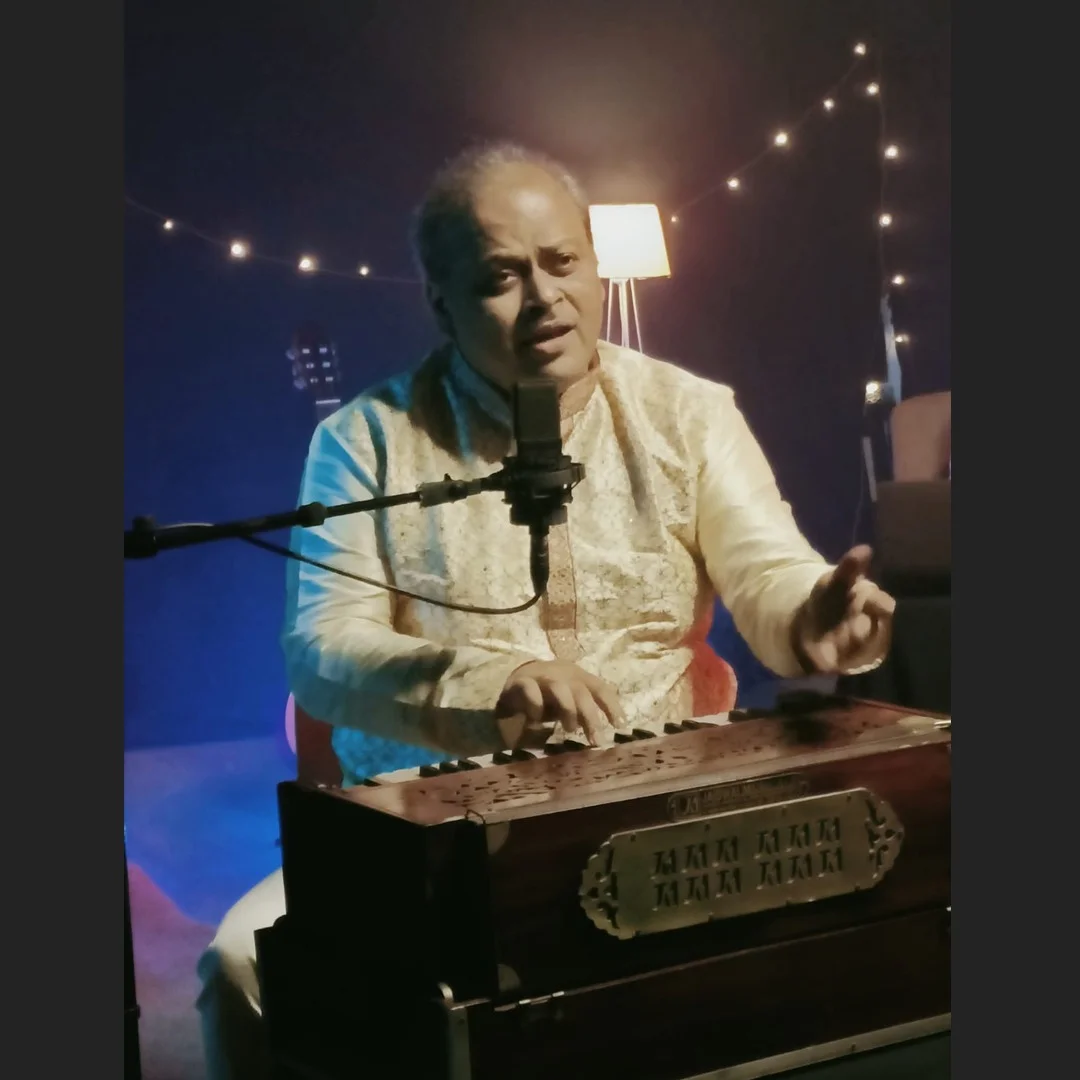
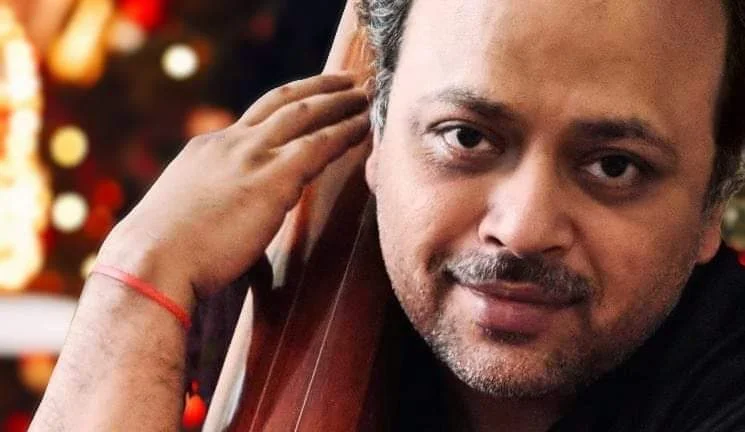
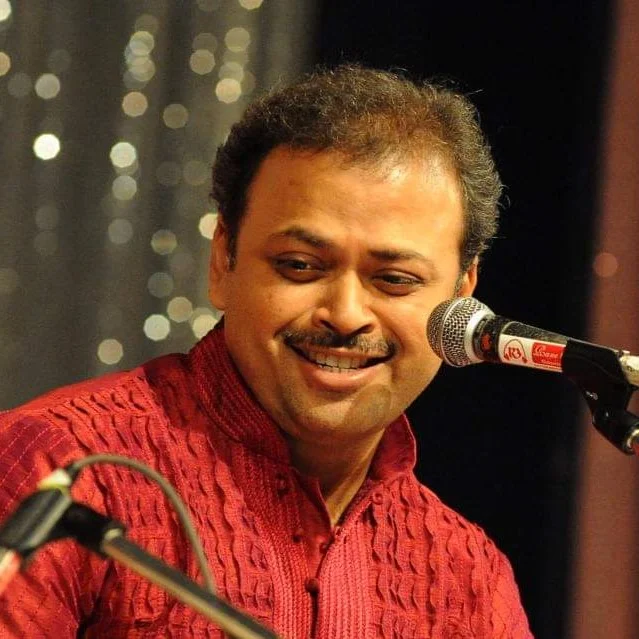
Sougata is a most sought Classical & Ghazal Vocalist Of The Present Era.He is an ardent performer travelling throughout the world. He is a prolific composer & an accomplished vocal trainer – Spreading The Essence Of Indian Classical Music To His Forthcoming Generations.
Guru Param Pujya Pandit Jasraj Ji in appreciation of sougata's musical skill proudly and affectionately bestowed him with the title of
"Pandit"
Pt Ravi Shankarji exclaimed Sougata after performance by saying
"Aaj Ka Shaam Ban Gaya"

Kolkata, West Bengal, India.

(+91)-8013873356

contact@sougatbanerjee.com
invationofficial@mail.com
